
Marigold - Tagetes
Marigold -Tagetes
erecta, are annual summer plants.
Although there are some 50 species,
some marigolds we know come from just three:
- Tagetes erecta are the tallest, at three to five feet. They are sometimes known as African, or American, marigolds.
- Bushy T. patula, or French marigolds, are somewhat smaller and more compact. Elegant and eye-catching, they have relatively demure flowers and usually grow from 6 inches to 2 feet tall.
- The dainty T. tenuifolia are the signet, or rock-garden, marigolds that like hot, dry sites and make a wonderful edging. Their flowers are edible.
Tagetes erecta species vary in size from 0.01 to 2.2 m tall. Most
species have pinnate green leaves. Blooms are naturally in golden, orange,
yellow, and white colors, often with maroon highlights. Floral heads are
typically (0.1-) to 4–6 cm diameter, generally with both ray florets and
disc florets. In horticulture they tend to be planted as annuals, although the
perennial species are gaining popularity.
Marigolds
need lots of sunshine. Though they grow in almost any soil, marigolds thrive in
moderately fertile, well-drained soil. I can be sown directly into the garden
once the soil is warm, or in pots till they germinate Germination from large,
easily handled seeds is rapid.
- Plant marigolds in full sun and well-drained soil.
- Keep the soil moist but don't water excessively.
- Fertilize marigold plants when the seedlings are planted Give each plant about 1 tsp. of a time-release granular fertilizer. No additional fertilizer is required, as marigolds are light feeders
- remove dry marigold blooms.
- Stake tall varieties of marigold to protect them against wind breakage.
Caring for beautiful marigold flowers is relatively easy, as these annuals tend to be low-maintenance. However they may call for a bit of extra assistance if they suffer damage caused by harsh weather and/or the common garden slug.
 |
| pluck dry marigold flowers |
 |
| Remove the seeds (the inner part of the flower) |
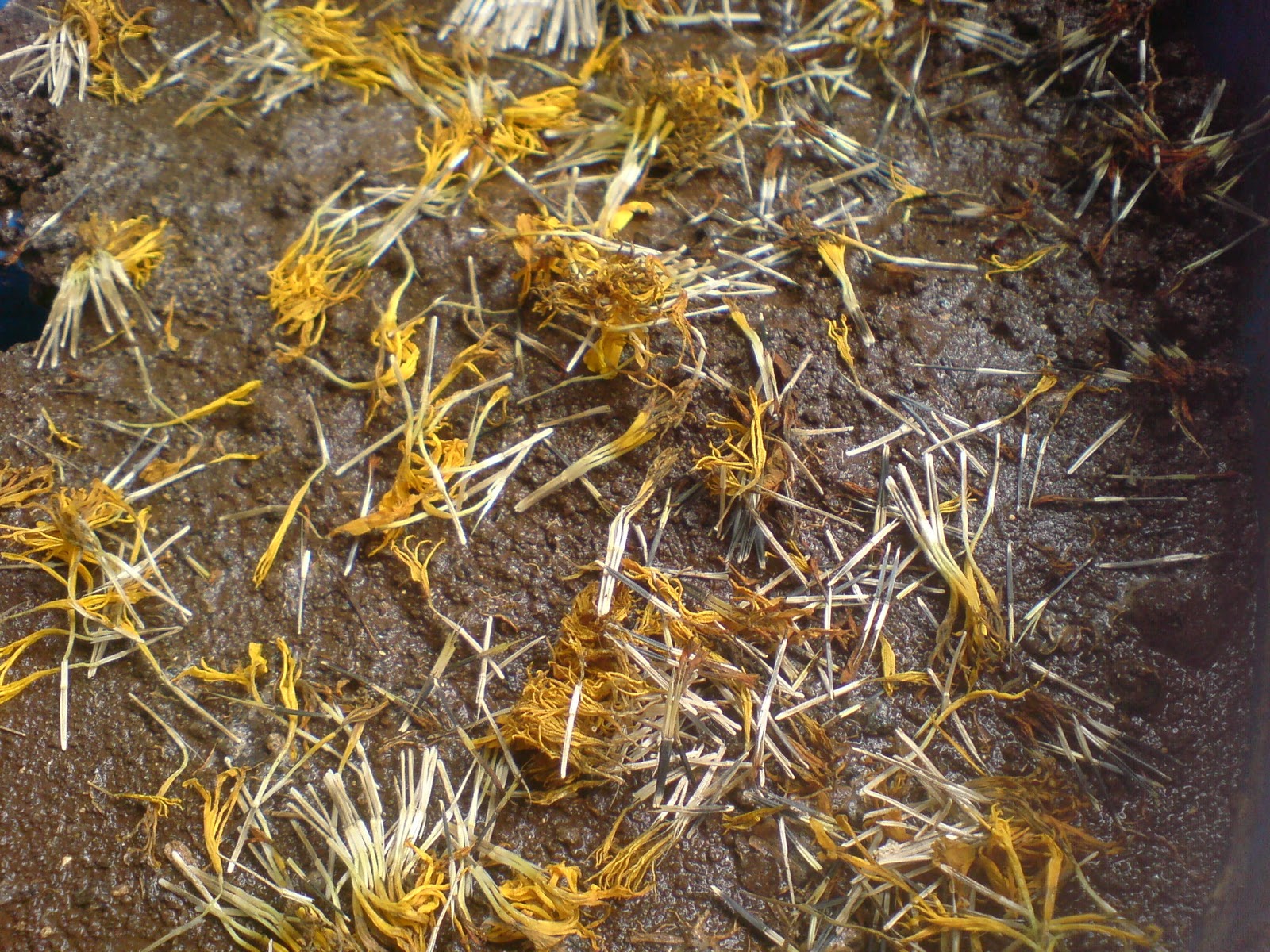 |
| spread them in a small recipient |
 |
| after 2-3 the seeds will sprout |
 |
| Transplant the plant one by one in firm land |
 |
| Use eggs to prevent garden slugs from eating those plants |
Read more...

