Showing posts with label edible. Show all posts

Sunday, February 17, 2013

Chinese Leek Blooming

Chinese leek, Allium tuberosum, also known as garlic chives,
Oriental garlic or Chinese chives in bloom:

Chinese Leek bloom

Read more...

Tuesday, December 11, 2012

Mint - Mentha


Mints belong to the genus Mentha, in the family Labiatae (Lamiaceae) which includes other commonly grown oil-yielding plants such as basil, sage, rosemary, marjoram, lavender, pennyroyal and thyme. Within the genus Mentha there are several different species, varying in their appearance, aroma and end use. The most common ones are spearmint (M. spicata), peppermint (M. × piperita), eau-de-cologne mint (M. × piperita var. citrata) and apple mint (M. rotundifolia). All are low-growing plants, readily sending out runners, or stolons, which develop new roots and shoots at the nodes.

Read more...

Monday, December 10, 2012

Dill - Anethum graveolens


Dill is a lovely herb that adds a refreshing flavor to any recipe. Dill is one of the easiest herbs to grow and would make a great first herb for someone who has never grown herbs before. You'll find lots of uses for both the leaves and the seeds in the kitchen. The best way to use dill is fresh from the garden, so during the growing season, cut your dill to use fresh as you need it. If not kept cut, your dill will go to seed, so cut often until you are ready to switch to seed production.

  • Dill, like most herbs, loves to bask in the sun, but will tolerate afternoon shade.
  • Dill grows up to 3 feet tall, so plant it in the back of your flower, vegetable or herb garden.
  • Sow seeds close together. This will allow the plants, which blow over easily to support each other.
  • Cover the seeds lightly, and allow a week or two for them to germinate.
  • For a continuous crop, sow repeatedly from mid spring to early summer.
  • Don't plant near caraway, fennel or angelica.
  • Caterpillars are fond of dill, and can be handpicked if they become a nuisance.
The taste of dill leaves resembles that of caraway, while the seeds are pungent and aromatic. Freshly cut, chopped leaves enhance the flavor of dips, herb butter, soups, salads, fish dishes, and salads. The seeds are used in pickling and can also improve the taste of roasts, stews and vegetables. In Mauritius dills are grown like wild herbs. They are widely used in the preparation of 'gateau piment'

Read more...

Sunday, December 9, 2012

Coriander - Coriandrum sativum


Coriander (Coriandrum sativum), also known as cilantro, Chinese parsley or dhania, Coriander, or cilantro, is an annual plant whose leaves and seeds are used in many parts of the world. Coriander seeds are often used in Asian cooking, and the leaves are widely used in Latin American cuisine. Plant care differs depending on whether it is being grown for leaves or for seeds
     
Plant coriander seeds in a sunny spot, with some shade for the hottest afternoon sun if the plants will be harvested for their leaves, as intense heat can cause the plants to flower and go to seed more quickly. They grow best from seeds directly in the soil, as transplanting them can also cause them to flower quickly.

If the coriander leaves are to be harvested, the plants should be at least four-to-six-inches tall.

Read more...

Saturday, December 8, 2012

Basil


There are several types of basil. The most common is bush or sweet basil, a compact plant growing to 18 inches or so during the season. Basil is a heat-loving annual herb. If you do any Italian cooking at all, you'll want to include basil in the herb garden


  • Keep basil plant in a sunny spot in your garden
  • Water regularly, but do not allow the soil to remain flooded. Repot or transplant if the soil is not well-draining.
  •  Fertilize 1 to 2 times a month with a liquid plant fertilizer. Any well-balanced fertilizer will do, but avoid those designed to increase blooming.
  • Trim often by pinching center leaves. This will not only give you a tasty addition to your recipes, but it will also help your plant to stay productive longer.
  • Remove any flower stalks. Once basil starts to bloom it will put all of its energy into flowering instead of growing leaves.
  • Water when the soil is dry. Basil, like many herbs, prefers conditions on the dry side.


Read more...

Sunday, November 25, 2012

Curry Trees - Murraya koenigii


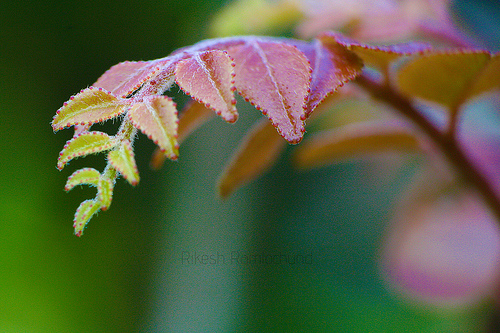
Its leaves are used in many dishes in India and neighbouring countries. Often used in curries, the leaves generally go by the name "curry leaves", though they are also translated as "sweet neem leaves" in most Indian languages (as opposed to ordinary neem leaves which are bitter).

It is a small tree, growing 4–6 m (13-20 feet) tall, with a trunk up to 40 cm diameter. The leaves are pinnate, with 11-21 leaflets, each leaflet 2–4 cm long and 1–2 cm broad. 

It has aromatic compound leaves with about 12 dark green leaves pet stem. The flowers are small, white, and fragrant.White flowers occur in clusters and are followed by pea sized berries which turn reddish brown when ripe. The small black shiny berries are edible, but their seeds are poisonous

Curry leaf tree is a native of India and Sri Lanka where it has been used medicinally and in cooking for hundreds of years. Leaves are used in curries, vegetable dishes, chutneys, pickles. The leaves are often fried first in oil before other spices are added. Curry Leaves are now also used in Malaysia and Indonesia mainly in fish curries.

Curry leaf trees are tropical plants but will grow in cooler climates if kept in warm area through the winter. The trees sucker vigorously so if space is limited growing in a pot is a good option. They grow well in a pot and make an attractive plant for a verandah or outdoor area.


Read more...

Saturday, December 5, 2009

Lemon Thyme

lemon thyme

Lemon Thyme is physically similar to the English or common thyme(Thymus Vulgaris). The only difference is in its flavor.  So, expect this article to talk only about the wonderful scent.
Keeping those plants around help a lot in repelling mosquitoes away - they might even do better than lemongrass. The trick is to crush the leaves of the lemon thyme to dissipate the lemon scent.  In the kitchen, lemon thyme beats common thyme with it's wonderful flavor. However, lemon thyme is best used fresh, as it's flavor fades away when dried.
flowering lemon thyme

Like the Common thyme, the lemon thyme will grow in most climates, but prefers a well-drained soil and lots of sun. It is easily grown in pots on your kitchen window sill. Find more in the common thyme profile.
Photo by izik and kthread.

Read more...

Friday, March 27, 2009

Strawberry Guava

Scientific Name Psidium cattleianum
Common Name Strawberry guava

Purple guava

Cherry guava

Strawberry Guava is a small tree, native to Brazil, that grows to about seven meters(23 feet) in height but is generally much smaller. The strawberry Guava is a very hardy plant that needs full sun for optimal growth and plenty of water when bearing fruits. They are generally located in geographically high regions where the average temperature is much cooler.

Bunch of strawberry guava
You get lots of fruits
Even low branches get fruits
Most of them are not ripe yet
However, there is a dark side to this plant:: It is an invasive plant. It is now considered as a weed in the tropics(even here in Mauritius).By the way, here it is called goyave de chine, literally translated to Guava of China.
According to the Invasive Species Specialist Group(ISSG) Database:

Psidium cattleianum is native to Brazil, but has been naturalised in Florida, Hawaii, tropical Polynesia, Norfolk Island and Mauritius for its edible fruit. It forms thickets and shades out native vegetation in tropical forests and woodlands. It has had a devastating effect on native habitats in Mauritius and is considered the worst plant pest in Hawi, where it has invaded a variety of natural areas. It benefits from feral pigs (Sus scrofa) which, by feeding on its fruit, serve as a dispersal agent for its seeds. In turn, the guava provides favourable conditions for feral pigs, facilitating further habitat degradation.
It is not obvious that it is an invasive plant here. Each year, thousands of Mauritians go on a strawberry guava hunt, when its the season(February-April), in the large fields of strawberry guava. The lucky ones(generally the first ones) return back home with bags full of fruits. Excess of strawberry guava is turned into a delicious jam. Unfortunately, the population takes the strawberry guava "forests" for granted and are not aware that it is some kind of invasion.
Their yummy flesh are similar to guavas
Propagation is very easy. Done by seeds, cuttings, layering or whatever method you like.

Read more...

  © Blogger templates The Professional Template by Ourblogtemplates.com 2008

Back to TOP  

^ Scroll to Top